Strategic Bankroll Allocation Methods for Online Poker Participants Leveraging Digital Wallet Systems
Written by Drew Sullivan · Aug 11, 2026

Strategic Bankroll Allocation Methods for Online Poker Participants Leveraging Digital Wallet Systems
Online poker environments require structured approaches to fund allocation that integrate digital wallet functions for transaction monitoring and limit enforcement. Players often establish initial capital pools based on game stakes and session frequency, with data from industry reports indicating average starting bankrolls ranging from 20 to 50 buy-ins for cash games. Digital wallets facilitate real-time tracking of deposits and withdrawals, which helps maintain separation between operational funds and reserve amounts.
Core Principles of Fund Division in Virtual Poker Settings
Allocation begins with categorization of total resources into tiers that account for variance across different poker formats. Cash game participants typically reserve 60 percent of their bankroll for regular play while setting aside 30 percent for tournament entries and the remaining 10 percent as a buffer against extended downswings. Digital wallets support these divisions through sub-account features that allow automated transfers at predetermined thresholds, reducing manual intervention and potential errors in record keeping.
Research indicates that consistent application of percentage-based betting caps, such as limiting individual session exposure to 2 to 5 percent of the dedicated pool, correlates with longer participation periods according to figures from the Alcohol and Gaming Commission of Ontario. Wallets equipped with spending alerts notify users when approaching these boundaries, enabling adjustments before limits are exceeded.
Integration of Transaction Tools with Risk Controls
Digital wallet platforms commonly include API connections to poker sites that log every chip purchase and cash-out in categorized reports. This linkage allows participants to review weekly or monthly patterns without relying on manual spreadsheets. In August 2026 several wallet providers expanded compatibility with multi-site networks, permitting consolidated views of activity across platforms operating under different licensing jurisdictions.
Security protocols within these systems incorporate two-factor authentication and instant freeze options that players activate during periods of suspected account compromise. Such measures protect bankroll integrity while maintaining access for legitimate transfers. Observers note that wallets with built-in gambling-specific filters automatically flag transactions exceeding user-defined parameters, providing an additional layer of oversight.
Adaptation Across Game Types and Stake Levels
Tournament players adjust their models to accommodate varying field sizes and payout structures, often allocating larger portions to satellite qualifiers that offer lower entry costs. Cash game specialists focus on maintaining steady reserves that cover at least 30 buy-ins at their primary stake level, with gradual step-ups only after documented profit milestones. Digital wallets accommodate these shifts through scheduled transfer rules that release funds only when performance metrics are met.
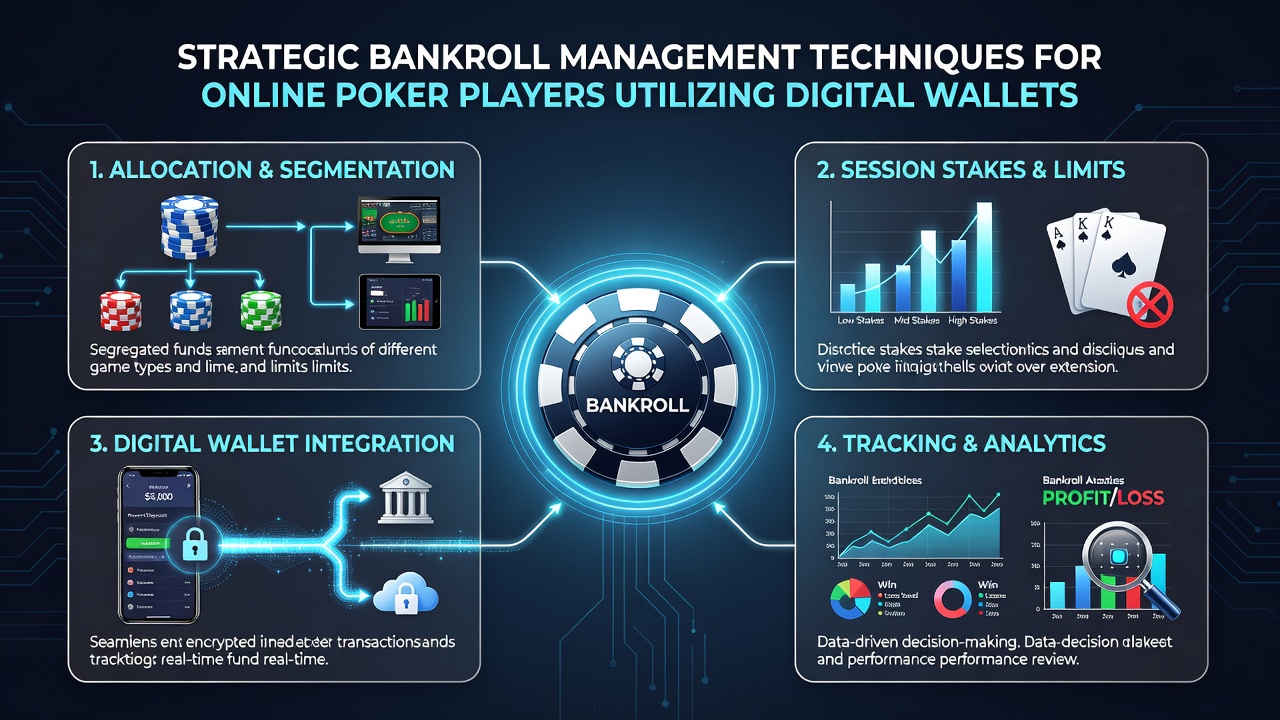
Studies from the University of Nevada Reno Gaming Research Center reveal that participants who link wallet analytics directly to session review software demonstrate improved adherence to stop-loss rules. The combination produces automated summaries that highlight deviations from planned allocation percentages, allowing corrections in subsequent sessions.
Regulatory and Platform Considerations in 2026
Multiple jurisdictions updated digital payment guidelines during 2026, requiring enhanced verification for high-volume transfers common in poker ecosystems. Wallets certified under these frameworks provide audit trails that satisfy compliance checks while preserving user privacy through encrypted logs. Participants operating across borders benefit from wallets that handle currency conversions at competitive rates, minimizing erosion of bankroll value during international site migrations.
Industry associations such as the European Gaming and Betting Association publish periodic updates on acceptable wallet features that align with responsible play standards. These documents detail minimum reporting capabilities that help users maintain accurate records for tax and self-exclusion purposes.
Conclusion
Effective management of poker resources through digital wallet systems relies on predefined allocation percentages, automated monitoring tools, and compliance with evolving platform standards. Data from regulatory bodies and academic sources shows measurable benefits in session longevity and variance absorption when these techniques receive consistent implementation. Continued expansion of wallet integrations in August 2026 and beyond supports more precise tracking across multiple sites and formats.