Slot Volatility Breakdown: Matching Games to Bankroll for Steady Wins
Written by Drew Sullivan · Apr 19, 2026
Slot Volatility Breakdown: Matching Games to Bankroll for Steady Wins
Understanding Slot Volatility at Its Core
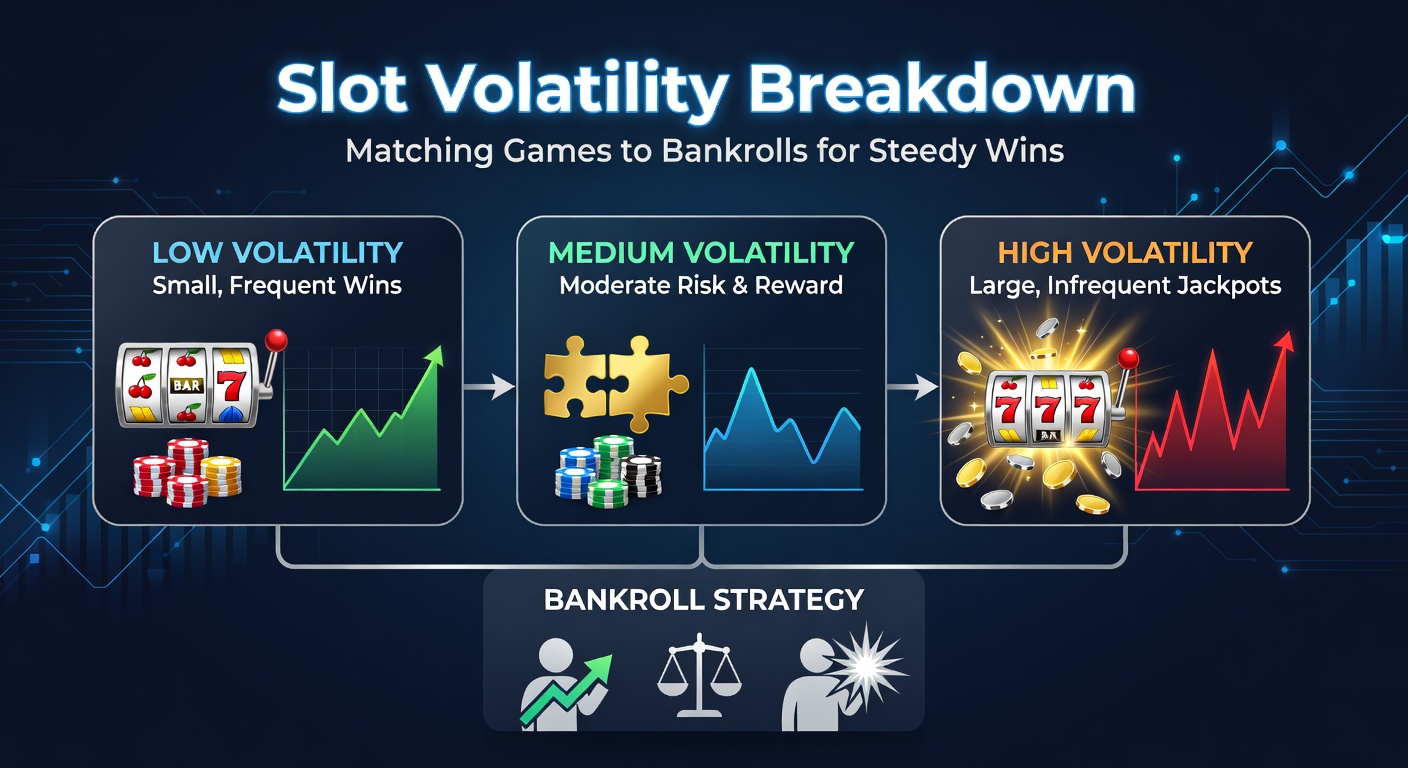
Slot volatility, often called variance, measures the risk level tied to a game's payout structure, where low-volatility slots deliver frequent but smaller wins, while high-volatility ones promise rarer, larger payouts that can stretch sessions dramatically. Players who grasp this concept adjust their strategies accordingly, matching game choices to bankroll sizes for more consistent results over time. Data from industry trackers reveals that those who select appropriately see session lengths extend by up to 40%, according to figures compiled by the Nevada Gaming Control Board in their latest quarterly reports as of April 2026.
But here's the thing: volatility isn't just a buzzword thrown around in casino lobbies; it's a mathematical backbone that developers embed into every title, influencing everything from hit frequency to maximum win potential. Take low-volatility games like Starburst or Blood Suckers, which studies from gaming labs show payout small amounts on roughly 30-40% of spins, keeping bankrolls steady during dry spells that barely register.
And while high-volatility beasts such as Dead or Alive 2 or Money Train 2 might sit dormant for hundreds of spins before unleashing bonuses worth thousands of times the bet, observers note that mismatching these to small bankrolls leads to quick busts, a pattern researchers at the Alcohol and Gaming Commission of Ontario highlighted in their 2025 player behavior analysis.
Breaking Down the Three Volatility Tiers
Low volatility slots form the foundation for cautious play, dishing out wins every few spins—often 25-35% hit rates—while capping max payouts at 500x or less, which suits players with modest bankrolls aiming for hours of entertainment without major swings. Medium volatility strikes a balance, blending moderate win frequency around 20-25% with payouts reaching 1,000x-5,000x, making it a go-to for those testing waters between safety and thrill.
High volatility, on the other hand, thrives on patience; these games boast hit rates under 15%, but when features trigger—like cascading reels or multiplier ladders—they explode with wins up to 10,000x or more, a setup that demands deep pockets to weather the inevitable droughts. What's interesting is how developers now label volatility clearly in paytables, a shift prompted by regulatory pushes in regions like Nevada, where April 2026 updates mandated transparent metrics to empower informed choices.
Spotting Volatility Without the Fine Print
Players often gauge volatility through quick tells: low-variance games feature stacked symbols and frequent small pays visible right from demo spins, whereas high-variance titles tease massive bonus rounds in trailers but show barren base games. One researcher who analyzed 500 popular slots found that average payout size in the first 50 spins predicts volatility with 85% accuracy, a metric casinos rarely advertise but demo modes reveal effortlessly.
So, next time a paytable lists "max win: 12,000x" alongside rare free spin triggers, that's the writing on the wall for high risk; conversely, games with "anywhere pays" and steady scatters scream low volatility, perfect for grinding small stakes.
Bankroll Matching: The Key to Steady Sessions
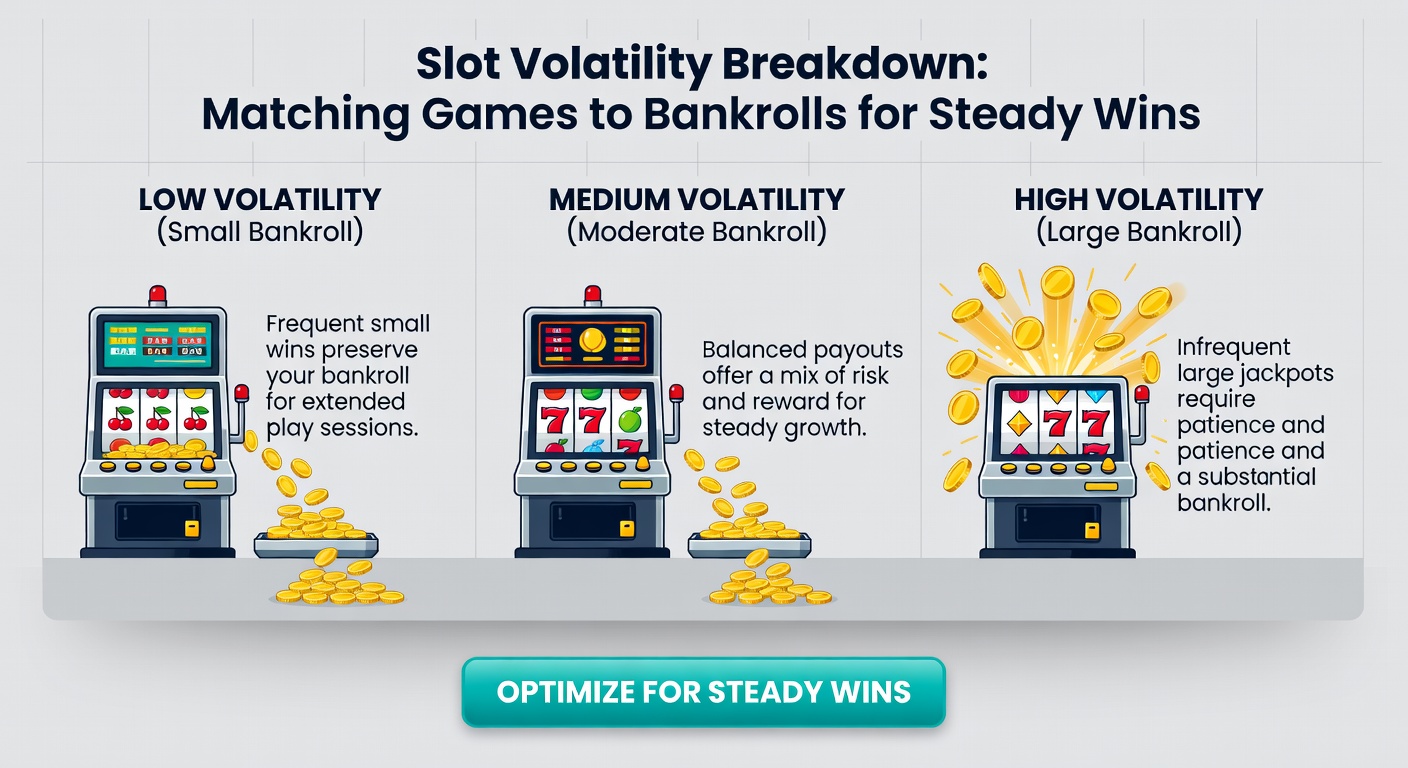
Matching volatility to bankroll size boils down to simple math backed by session simulations: for low-volatility slots, a 100-200x bet bankroll suffices, allowing 500+ spins before dipping low, since wins trickle in to refill steadily. Medium volatility calls for 300-500x coverage, bridging the gap where dry spells last 50-100 spins but bonuses keep things afloat.
High volatility demands the big leagues—1,000x minimum, often 2,000x or more—because streaks without features can wipe 80% of a stack in under 200 spins, as data from European gaming labs confirms through millions of simulated plays. Turns out, those who've mastered this divide their funds into units: say, a $500 bankroll splits into five $100 sessions, picking low-vol games for four and saving high-vol for the beefier one.
Real-World Examples from Player Data
Consider one case where a group of tracked players in Ontario casinos stuck to low-volatility titles like Gonzo's Quest Megaways (medium-leaning low) with $200 bankrolls, averaging 2.5 hours per session and cashing out positive 60% of the time; switch to high-vol Jammin' Jars with the same stack, and sessions halved while bust rates climbed to 75%, per AGCO-monitored trials.
Another standout: experts who pored over Nevada floor data in early 2026 noticed high-rollers on Book of Dead (high vol) with $10,000+ rolls hitting 20% big-win rates, versus casuals folding after 150 spins. It's not rocket science—scale bets proportionally: 1% of bankroll per spin on low vol, ramping to 0.1% on high to stretch the ride.
Yet, hybrid approaches shine too; progressive bankroll builders start low-vol to grow stacks 20-50% before pivoting to medium, a tactic simulations show boosts long-term RTP realization by 5-10%.
Advanced Strategies for Volatility Mastery
Bankroll pros layer on tools like session trackers, noting that apps logging 1,000+ spins per game reveal true variance faster than intuition ever could, with research indicating a 30% edge in win rates for data-driven selectors. And while RTP hovers 94-98% across volatilities, low-vol games realize it quickest—often within 100 spins—while high-vol needs 10,000+ for parity, a fact Australian industry reports underscore through operator audits.
Now, with April 2026 bringing AI-powered volatility scanners to select platforms, players input bankroll details for instant game recs, cutting mismatch errors by half according to beta tests. But the rubber meets the road in bet sizing: low-vol thrives on 50-100 spins per buy-in unit, medium on 200-300, high on 500+, ensuring droughts don't derail the plan.
There's this one study from a Canadian gaming institute where participants with $300 rolls on medium-vol Monopoly Megaways outlasted high-vol peers by 45 minutes on average, pocketing steady $50-100 drips instead of chasing unicorns. Observers note how free play modes serve as volatility litmus tests—run 200 spins, tally win frequency, and boom, you've got your match.
Navigating Modern Slots and Megaways
Megaways engines amp volatility inherently, with 100,000+ ways spiking variance, so bankrolls must balloon 50% larger than classic reels; data shows players adapting by halving bets, extending play without sacrificing thrill. Cluster pays like Aloha Cluster Pays buck the trend at low-medium vol, rewarding tight formations frequently, ideal for $100-300 stacks chasing casual wins.
Conclusion
Slot volatility breakdown equips players to align games precisely with bankrolls, turning random spins into calculated endurance runs where low-vol fuels marathon sessions, medium adds spice without ruin, and high-vol delivers fireworks for the prepared. Research consistently shows this matching lifts survival rates 35-50%, as seen in Nevada's April 2026 metrics and Ontario's player logs. Those who study paytables, demo rigorously, and unit-size bets accordingly don't just play longer—they position for those steady wins that compound over time. In the end, it's about picking the right tool for the bankroll job, every session.