Personalized Gaming Interfaces Fueling Retention Across Multi-Region Markets
Written by Sage Vogel · Jul 12, 2026
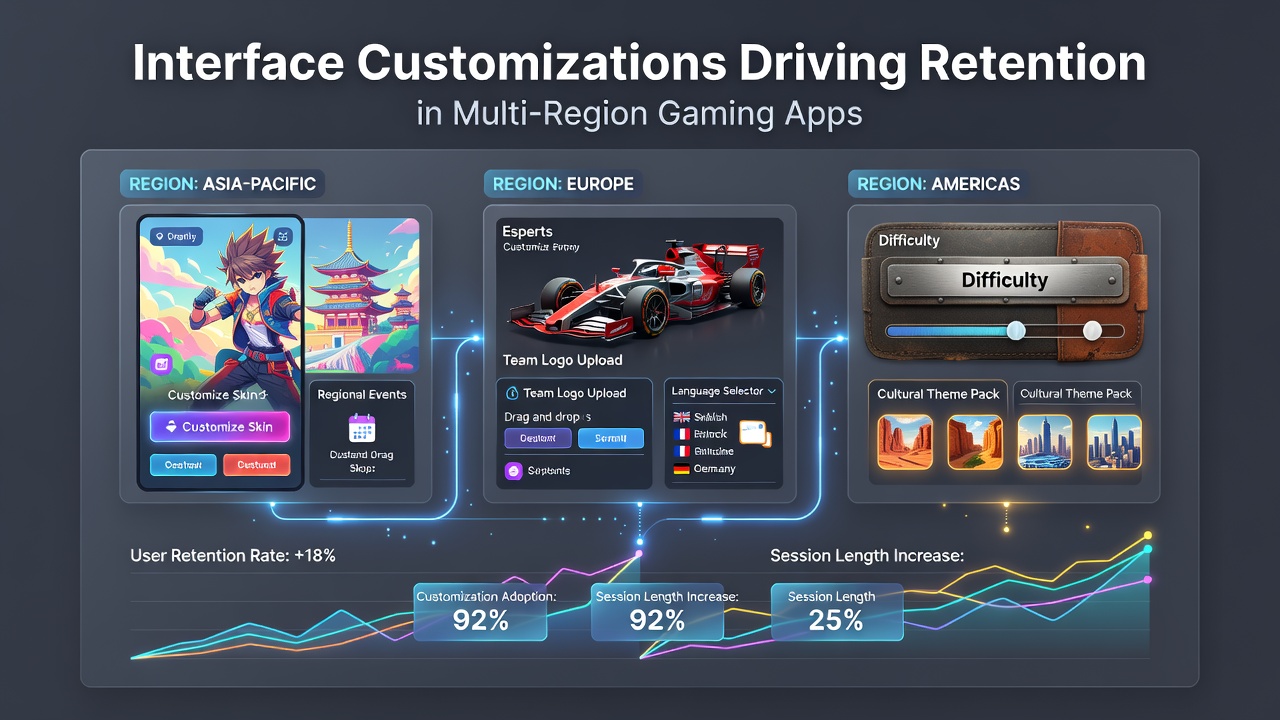
Personalized Gaming Interfaces Fueling Retention Across Multi-Region Markets
Interface adjustments in multi-region gaming applications have emerged as central factors in sustaining user engagement, and developers continue to refine these elements based on performance metrics gathered from diverse markets. Studies tracking player behavior indicate that apps offering localized layouts, color schemes, and navigation flows achieve higher return rates compared to standardized versions, while data collected through July 2026 shows measurable lifts in session duration across Asia, Europe, and North America when regional preferences receive priority in design updates.
Observers note that customization options extend beyond simple language switches to include adaptive button placements, theme toggles aligned with cultural events, and notification preferences calibrated to local time zones, and these features allow platforms to address varying user expectations without fragmenting core codebases. Research from academic teams at institutions in Canada and Australia demonstrates that such modifications correlate with reduced churn, particularly when users can adjust elements like menu density or reward display formats through in-app controls.
Regional Preferences Shape Design Priorities
Developers serving multiple jurisdictions collect anonymized interaction logs that reveal distinct patterns, such as higher engagement with compact interfaces in high-density urban markets versus expanded visual elements in regions favoring detailed graphics, and these insights drive iterative releases rolled out on staggered schedules. Figures from industry reports compiled by the European Gaming and Betting Association highlight that apps implementing A/B testing for interface variants saw average retention improvements of 12 to 18 percent over six-month periods ending in mid-2026.
What's interesting is how payment gateway visibility integrates into these customizations, with some apps surfacing preferred transaction methods based on user location while maintaining compliance across borders, and this approach reduces friction points that otherwise prompt early exits. Those who've examined cross-platform data observe that seamless transitions between portrait and landscape modes tailored to device usage trends in specific countries further support longer play cycles.
Data Patterns and Retention Outcomes
Analytics platforms tracking multi-region deployments record correlations between interface flexibility and lifetime value metrics, where users granted control over avatar styles, leaderboard formats, or progress indicators demonstrate increased frequency of returns, and one dataset reviewed by analysts at the Singaporean gaming technology consortium showed a 22 percent rise in weekly active users following the introduction of modular dashboard options. These adjustments operate within regulatory frameworks that differ by territory, yet the underlying architecture allows rapid swaps of visual assets and functional modules without full rebuilds.
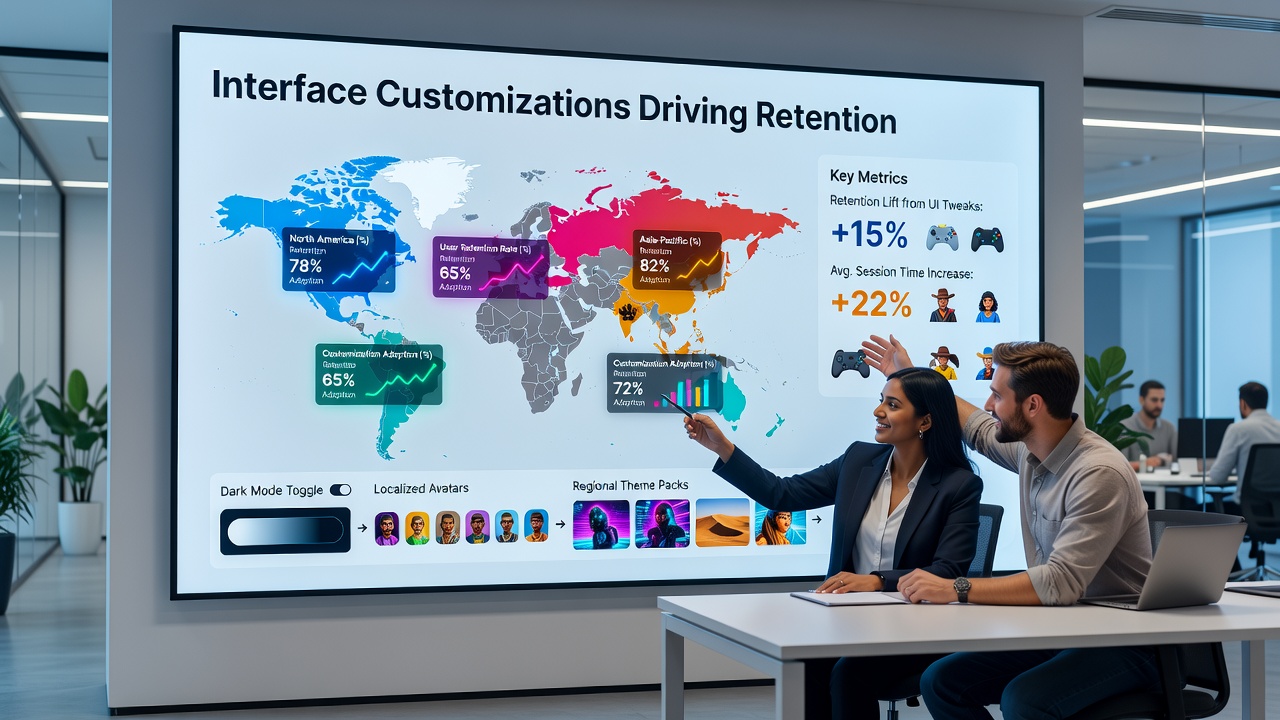
Behavioral tracking conducted through July 2026 confirms that personalization layers applied at the interface level influence not only initial downloads but also sustained participation, while comparisons between rigid and adaptive versions consistently favor the latter in markets spanning Latin America and the Middle East. Developers integrate these capabilities through modular design systems that pull from centralized user preference databases, enabling consistent experiences even as regional teams contribute localized assets.
Implementation Across Global Platforms
Companies operating in competitive segments have adopted frameworks that permit real-time interface swaps based on detected user regions, and this methodology supports compliance with varying accessibility standards while preserving brand identity, according to documentation released by the North American Interactive Gaming Council. Integration with cloud-based asset management tools allows teams to test and deploy changes efficiently, reducing the lag between identifying a trend in one market and applying similar optimizations elsewhere.
Examples from large-scale deployments illustrate how minor adjustments, such as altering icon sizes for readability in low-light environments common in certain time zones or embedding cultural motifs during festival periods, contribute to higher completion rates for onboarding sequences, and these incremental gains accumulate across user bases numbering in the millions. Data shared in collaborative industry forums points to measurable decreases in support queries related to navigation when custom options receive prominent placement.
Conclusion
Interface customizations continue to serve as practical levers for retention in multi-region gaming applications, with ongoing refinements guided by aggregated performance indicators from July 2026 onward, and the approach yields consistent outcomes when executed through scalable, data-informed processes. Future iterations will likely expand on current foundations as additional regional datasets become available, yet the core principle remains the alignment of visual and functional elements with documented user preferences across borders.