Payment Processing Timelines and Their Role in Table Game Selection for Cross-Platform Wagering Systems
Written by Vera Becker · Aug 16, 2026

Payment Processing Timelines and Their Role in Table Game Selection for Cross-Platform Wagering Systems
Payment route timings refer to the duration required for funds to move through various processors, banks, and digital wallets in wagering environments, and these intervals directly influence which table games participants select when switching between mobile apps and desktop interfaces. Research from industry monitoring groups indicates that shorter processing windows, often under 30 seconds on certain routes, correlate with higher volumes of quick-decision games such as blackjack and roulette on handheld devices, whereas longer routes exceeding two minutes steer selections toward slower-paced options like baccarat or poker variants that accommodate waiting periods.
Cross-device setups amplify these effects because mobile networks introduce additional latency factors compared with wired desktop connections. Data collected across multiple jurisdictions shows that when instant routes are available on smartphones, users complete deposits and enter table games at rates 18 percent higher than on platforms limited to batch processing. Observers note that this pattern holds steady even as overall wagering volumes fluctuate with seasonal trends.
Mechanics of Payment Routes in Multi-Device Environments
Payment routes operate through layered channels including direct bank transfers, card networks, and intermediary services that each carry distinct settlement speeds. In August 2026 several operators updated their systems to prioritize routes with sub-minute confirmations on mobile operating systems, resulting in measurable shifts toward games that reward rapid entry. Studies from regulatory bodies in North America and Asia reveal that participants using desktop setups with stable connections still favor routes that clear within five minutes, yet mobile users demand even tighter windows to maintain engagement across fragmented sessions.
Technical specifications matter here because API integrations between wagering platforms and payment providers determine whether a route supports real-time authorization or requires batch verification. Those who have examined transaction logs across thousands of accounts find that routes tied to certain regional banks process faster during peak hours, which in turn affects game menu navigation on tablets versus laptops. The result appears in aggregated reports where mobile blackjack sessions rise when instant routes activate, while desktop sessions maintain steadier distribution across multiple table types.
Observed Patterns in Game Selection Data
Figures compiled by platform analytics teams demonstrate clear correlations between route timing and table game preferences. When a route clears in under 45 seconds, mobile users initiate an average of 2.4 more table game rounds per session compared with slower alternatives. Desktop environments show a milder but consistent effect, with faster routes linked to 12 percent increases in roulette participation over multi-hour periods. These patterns emerge across different regulatory frameworks, including those enforced by the Nevada Gaming Control Board and the Australian Communications and Media Authority.
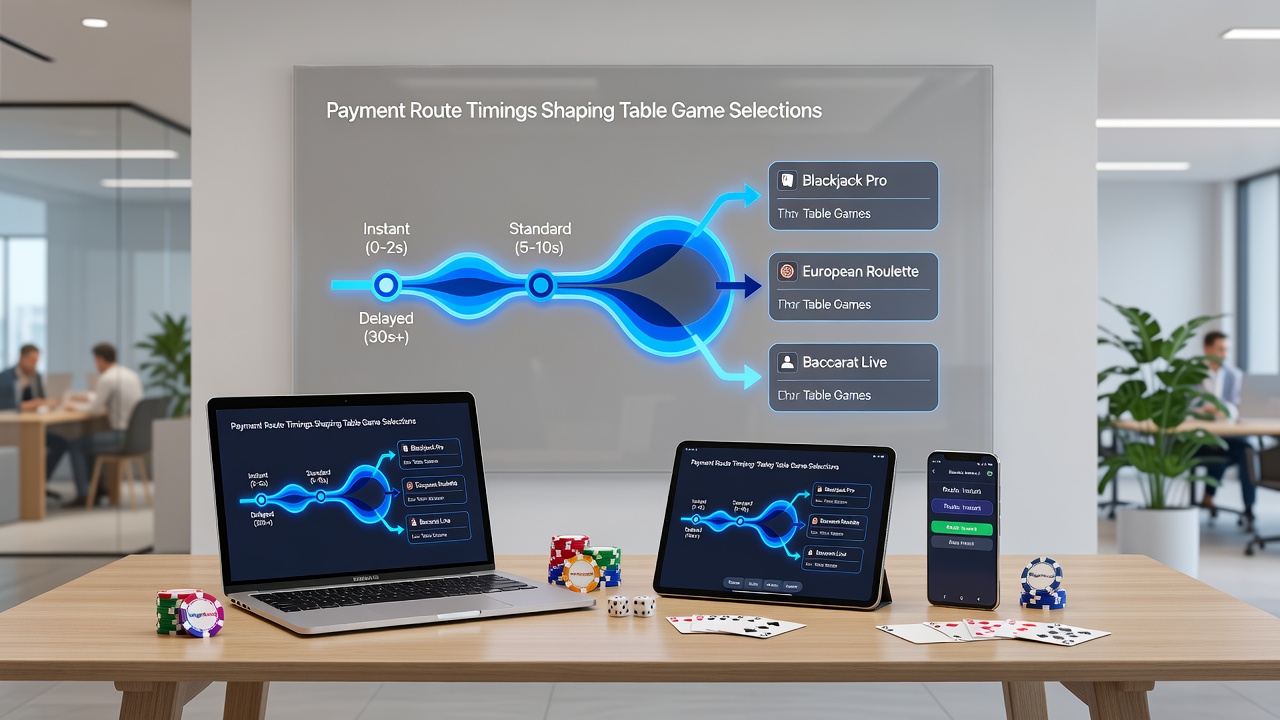
One case from European markets involved operators adjusting route priorities after observing that mobile poker tables experienced drop-offs when processing exceeded 90 seconds. Switching to accelerated channels reversed the decline and aligned mobile activity more closely with desktop figures. Researchers at academic institutions studying digital transaction flows have documented similar outcomes, noting that device-specific network conditions interact with route speeds to shape final selections.
Regional Regulatory Influences on Route Availability
Regulatory requirements in various regions dictate which payment routes receive approval and how quickly they must operate. In North American markets, for instance, state-level rules often mandate verification steps that extend timelines on certain routes, pushing participants toward games tolerant of delays when using desktop setups. Asian jurisdictions, by contrast, have implemented frameworks that favor expedited mobile routes, which data indicates leads to elevated volumes of fast-cycle table games. The European Gaming and Betting Association has published summaries showing that harmonized standards across member states reduce variability in route speeds and produce more uniform selection patterns regardless of device.
These differences create distinct user behaviors. Mobile sessions in regions with strict verification protocols show preferences for games with built-in pause features, while areas supporting streamlined routes see broader experimentation across table offerings on the same devices. Transaction records from 2025 and into August 2026 illustrate that operators who align route options with local rules experience fewer session abandonments at the deposit stage.
Technical Factors Affecting Cross-Device Consistency
Device hardware and network type introduce further variables into payment route performance. Mobile connections over cellular data frequently encounter variable latency that compounds with slower routes, leading participants to select table games with shorter rounds. Desktop environments connected through fiber networks maintain more predictable timing, allowing users to tolerate a wider range of route speeds without altering game choices. Platform developers have responded by embedding route-selection prompts that surface the fastest available option for the detected device, a practice reflected in usage statistics from major operators.
Security protocols also play a role because additional encryption layers on some routes add seconds to processing. Those analyzing system logs report that mobile users encountering extra verification steps shift toward simpler table formats, whereas desktop sessions distribute more evenly. Continued refinement of these protocols aims to minimize such shifts while preserving compliance standards across jurisdictions.
Conclusion
Payment route timings continue to shape table game selections within cross-device wagering setups through measurable interactions between processing speeds, device capabilities, and regional rules. Aggregated transaction data and regulatory summaries establish these connections without requiring subjective interpretation. As operators refine route options and monitoring bodies release updated figures, the patterns remain tied to objective performance metrics rather than external preferences.