Cross-Border Shifts Prompt Casino Loyalty Programs to Recalibrate Rewards Between Tables and Reels
Written by Vera Becker · Jul 9, 2026
Cross-Border Shifts Prompt Casino Loyalty Programs to Recalibrate Rewards Between Tables and Reels
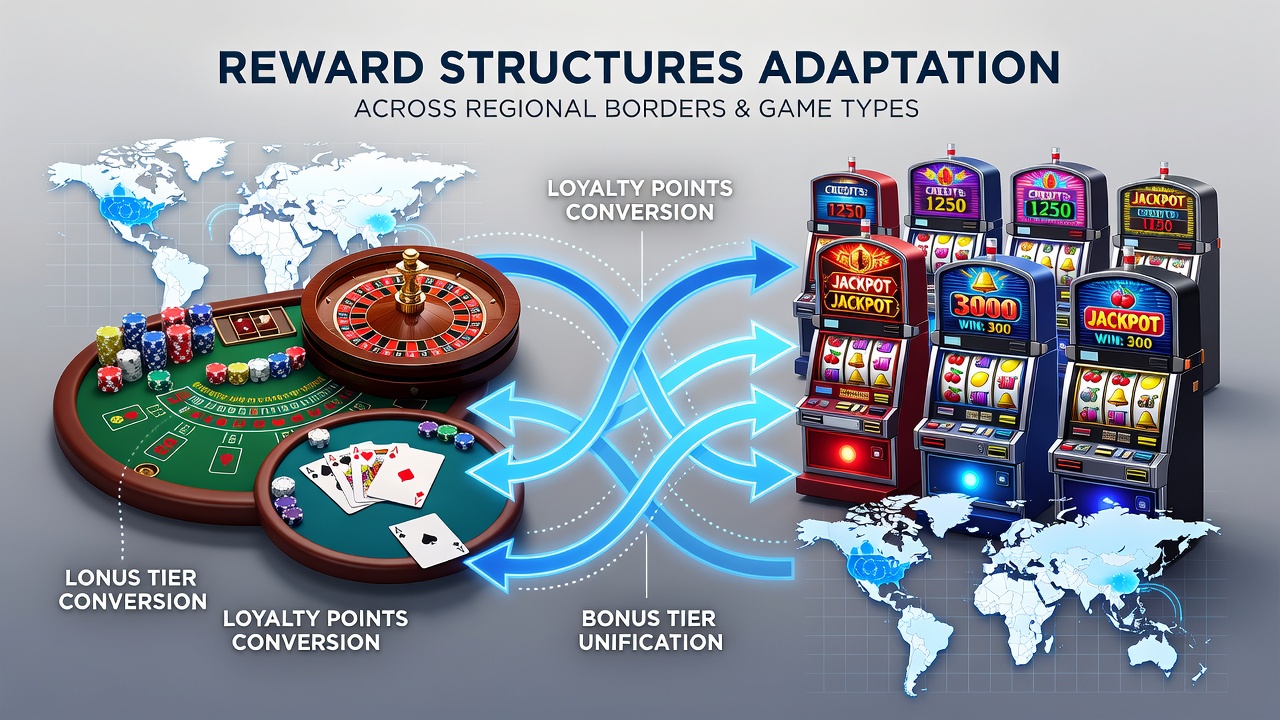
Regional borders create distinct regulatory environments that force loyalty operators to adjust point accrual rates, comp values, and redemption tiers whenever players move between table games and reel machines, and data from multiple jurisdictions shows these adaptations follow consistent patterns tied to tax structures and player tracking rules. Operators in areas with tight table game limits often weight blackjack and poker play higher than slots to meet revenue targets, while neighboring regions with slot-heavy floors apply different multipliers that reset automatically upon geolocation verification.
Regulatory Frameworks Shape Point Valuations
States and provinces maintain separate gaming statutes that dictate minimum return percentages and maximum hold times for loyalty redemptions, so a player crossing from one jurisdiction to another encounters immediate changes in how table game wagers convert to points compared with reel spin activity. Figures released by the Nevada Gaming Commission indicate table game play earns 1.8 times the base points of equivalent slot wagers within state lines, yet the same player entering a neighboring tribal compact area sees that ratio invert because local rules prioritize electronic gaming device volume. These shifts occur at automated kiosks that read player cards and apply the active jurisdiction's formula without manual intervention.
Canadian provinces operate under provincial gaming authorities that publish quarterly reconciliation reports, and analysts tracking cross-border traffic note that Ontario's tiered comp system assigns higher cashback percentages to table minimums above $50 while British Columbia caps reel machine bonuses at fixed daily limits. When a single loyalty account spans both provinces, the backend system flags the location change and recalculates remaining balances using the stricter of the two formulas to maintain compliance.
Game-Type Multipliers Adjust Dynamically
Loyalty engines track average bet size, game speed, and theoretical loss separately for tables versus reels, then apply location-specific multipliers that update every time a player card registers at a new property. Research from the University of Nevada, Las Vegas gaming laboratory demonstrates that table game sessions lasting under 45 minutes receive accelerated point grants in high-tax border zones to offset slower table turnover rates, whereas reel machines accumulate points at a steadier per-spin rate that remains constant across most regional lines.

What's interesting is how these multipliers interact with time-of-day adjustments that some properties activate during peak summer months. In July 2026 several Midwestern tribal operators introduced temporary 15 percent boosts for table game play between 8 p.m. and midnight to compete with nearby slot-focused venues that kept their reel multipliers flat. The net result appears in aggregate transaction logs showing increased table-to-reel rotation as players chase whichever category currently carries the higher effective rate.
Player Tracking Systems Bridge Jurisdictional Gaps
Centralized databases maintained by multi-state operators reconcile daily activity across properties, yet they must segment records by regulatory district to satisfy audit requirements. When a player moves from a reel-dominant market into a table-heavy one, the system pauses the prior multiplier set and loads the destination rules within seconds of card insertion. Observers note that this seamless switch prevents point inflation while still allowing seamless redemption of previously earned comps at any affiliated property regardless of border.
Industry reports compiled by the American Gaming Association track how many accounts trigger location-based rule changes each month, and the numbers reveal steady growth in cross-border play as mobile check-in features expand. These reports also document that disputes over recalculated balances drop when operators publish clear jurisdictional matrices on their player portals, giving users advance visibility into upcoming point rate changes before travel.
Redemption Options Reflect Local Market Conditions
Comp catalogs differ by region because hotel room costs, dining prices, and entertainment ticket values vary, so reward structures automatically display only options available within the player's current jurisdiction. A free-play balance earned on tables in one state may convert to reel credits at a different exchange rate once the player crosses into another, and the conversion occurs at the moment of redemption rather than at the moment of earning. This approach keeps operators inside each market's promotional spend caps while still honoring the original point value through adjusted credit amounts.
Academic studies examining loyalty data across the U.S.-Canada corridor find that players who rotate frequently between game types maintain higher overall visit frequency when they receive transparent notices about rate changes at each border crossing. The same studies record lower complaint volumes at properties that embed these notices directly into the mobile app interface rather than requiring separate lookups.
Conclusion
Border-driven adjustments to reward structures continue to evolve as more jurisdictions adopt real-time geofencing and unified player databases. The underlying mechanics remain anchored in local statutes that assign different values to table versus reel activity, and operators respond by building automated systems that enforce those distinctions without interrupting the player experience. As additional regional compacts take effect, the same pattern of dynamic multiplier updates and segmented redemption catalogs is expected to spread further.